
Decluttering may be the single most important thing you can do when beginning your homemaking pursuits! It’s truly such a liberating journey, especially for moms with young children or really anyone who is simply wanting to feel calmer in their homes.
Perhaps you’re starting to feel the heaviness of all the things you have to care for on a daily basis? Or feeling overwhelmed by all of the colors and patterns and textures all around you in your home (i.e visual clutter). I know it sounds wild, but maybe all of those toys really do just need to freakin go so you can retain your sanity.

I fully understand mama, I have been in the trenches too. Lived there for a while. Didn’t care for it. I now make conscious efforts every single day to keep the clutter at bay in my home – I hope to help you see the value in decluttering and find your own way through this journey. This is your friendly nudge to just get started!
Today, I’m here to help you claw your way back out. While the chaos of toys and daily essentials may seem overwhelming right now, a well-organized home brings peace and efficiency. It will give you a boost that you didn’t know you were missing. Productivity flows from a well organized space. It will provide shocking clarity for both your physical and emotional well-being. I’m sure you’re feeling that at least a little bit or you wouldn’t be here reading this. So, let’s get to it!
6 Steps to A Decluttered Home and Mind
Step 1: Set Realistic Goals
Start by setting achievable decluttering goals. Focus on specific areas or rooms, ensuring that your objectives are realistic considering the time constraints and energy levels that come with parenting and running your home. Work on this while the kids are in school if they are of school age or have your husband take them to the playground for an hour or two on the weekend while you get to work!

Step 2: Purge First, Ask Questions Later
Empty the space you are working in. I mean this quite literally. If you can physically move the object – get it out of the space that you’re working in. Your room should be bare bones before you make any decisions of what to get rid of, keep, sell etc.
Grab the cardboard boxes from a recent delivery, or laundry baskets, or whatever you have around you that can be used for this and fill them to the brim. Keep one box for the items that you know for sure you’ll be getting rid of. Anything you’re unsure about, don’t dwell on it too long right now – we will come back to those items in a few. Stash your boxes in another room or the garage for now. Out of site out of mind!
Enjoy your empty space for a little while. Walk away to grab a snack or the mail or whatever. Take note of how you feel about the space when you come back to it after it’s been emptied. Now would be the time for a little furniture re-arranging if you feel so inclined to give the room a truly fresh feel. Have some fun with it!
Involve the Kids (Maybe?)
If you’re confident that your kids are fine with change and wont have an absolute meltdown about the mickey mouse toy they haven’t played with in two years as soon as you try to give it away – then by all means, turn decluttering into a family affair!
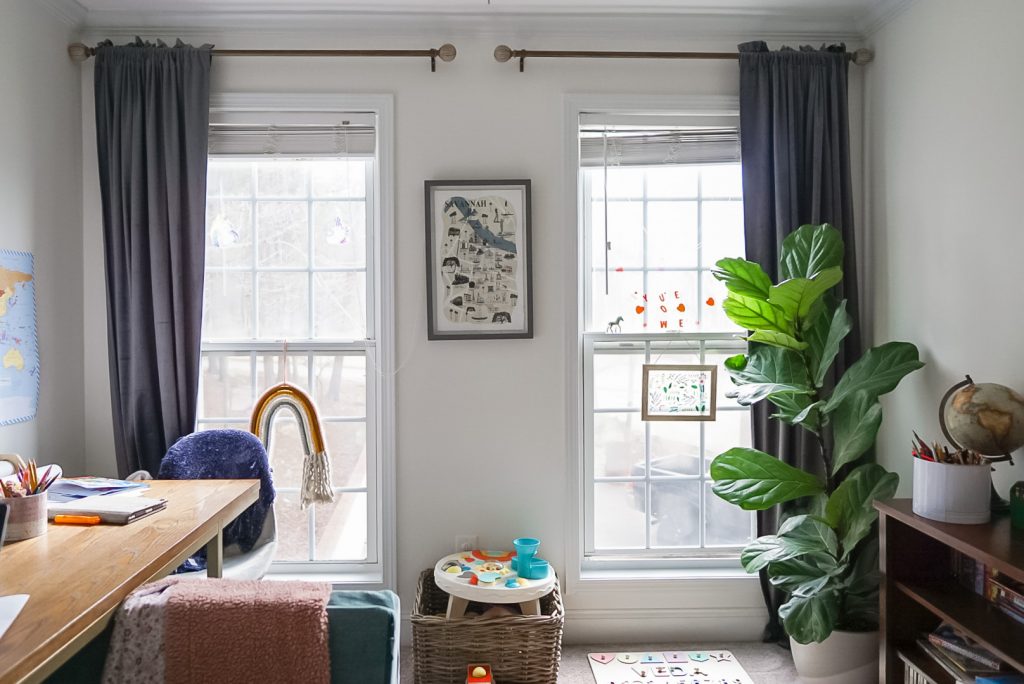
However, if your kiddos are more like mine, then wait until the purging has been done and then bring them into the party. Teach your children the importance of organization by involving them in the process of designating a home for each of the remaining items. Assign simple tasks, like finding a new designated home for their toys or folding clothes, based on their age and capability.
Step 3: Sort What’s Left Over After The Purge
Keep that decluttering momentum up ladies! Begin with a systematic sorting process of the items you stowed in the garage or wherever they were shoved in step 2. Separate items into categories such as keep, donate, and sell. Any trash should’ve been dealt with by now but maybe keep a trash bin handy anyway, just in case something was missed. Be ruthless in purging items that are no longer needed or have outlived their usefulness.
If you don’t know the item to be useful, beautiful or overly sentimental, it must go. Anything not used in the past year – gone!
Storage Solutions
Invest in practical storage solutions. Utilize baskets, bins, and labeled containers to organize toys, clothes, and other essentials. Opt for storage that is easily accessible for little ones to encourage independent tidying up.
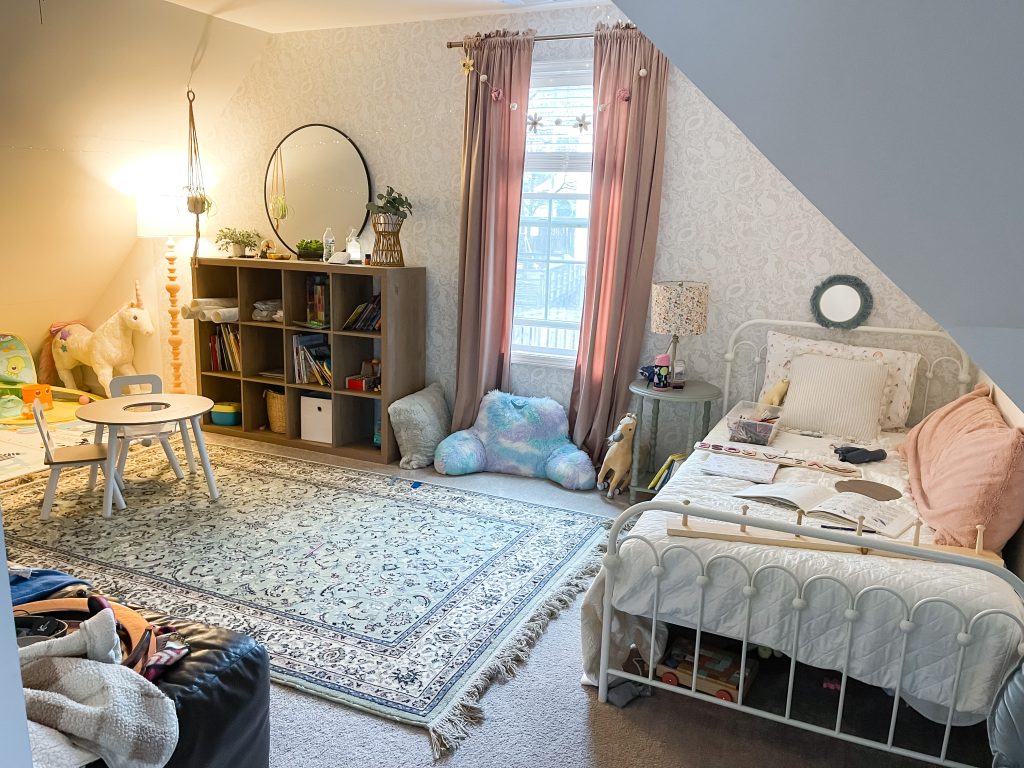
Step 4: Rotate Toys
To prevent toy overload, consider implementing a toy rotation system. Store some toys out of sight and rotate them back into the play area periodically. This not only reduces clutter but also keeps toys exciting and engaging for the kids. Trust me, it really does help your kids engage with their toys more! No more whining about being bored all the time. Praise be.
We rotate our toys about monthly in our home. The toys currently out of rotation are stored in old diaper boxes at the top of each child’s closet when not in use. I keep only 2 – 3 boxes of toys in our rotation. So, every 3rd or 4th month they will be reintroduced to their toys. Just long enough for them to have forgotten the toy existed and make it like new again. Ha!
If you have more than 2 or 3 extra boxes once the toy rotation has been established, I’d go back through yet again and purge until you are down to only 2-3 boxes at most! This cycle will need to be repeated around birthdays and holidays when additional items are likely to be added to the current cull.
Step 5: Streamline Clothing
Simplify your children’s wardrobe. Keep only the clothes that fit and are in good condition. Donate or pass on items that no longer serve their purpose. Consider capsule wardrobes for both you and your little ones with similar tones or neutral colors so everything can easily be mixed and matched.

We keep only a small 3-drawer dresser for our toddler with Pj’s in the top, shirts in the middle, and pants/shorts in the bottom. There is a basket on top with underwear and socks plus one for seasonal gear such as swimsuits or fleece hats and gloves. Dresses or more formal items are hung on hangers.
The Art of Dressing Well: How To Do It (For You) and Why It Matters
Step 6: Create Designated Zones
Establish specific zones for different activities. Designate a pretend play area with a kids playhouse or nugget couch etc., a study corner with books and a cozy chair or floor pillows, and an arts and crafts space with a kid sized table and cabinet with art supplies or an art easel, etc.
Clearly defining these zones helps maintain order and encourages children to focus on specific activities in designated spaces. It will help them remember that the crayons do not belong in the middle of the living room floor – they go on the shelf by her coloring table! His toy dinosaurs shouldn’t be left in the kitchen – they need to rejoin their friends who were busy destroying Barbie’s castle up in the playhouse. Catch my drift?
Make it fun yet organized enough that a small child can understand where the items belong.

Digital Decluttering
Extend the decluttering process to the digital realm. Organize digital photos, files, and apps on your devices. Delete unnecessary apps on your phone, unsubscribe from irrelevant emails, and streamline your digital space for a more peaceful online experience. This will help so much with your mental load and any overwhelm attached to technology. And let’s be honest, technology definitely can be a major pain point when we are feeling overwhelmed.
How to Live a More Intentional Life by Doing a Digital Detox
Mindset is Everything
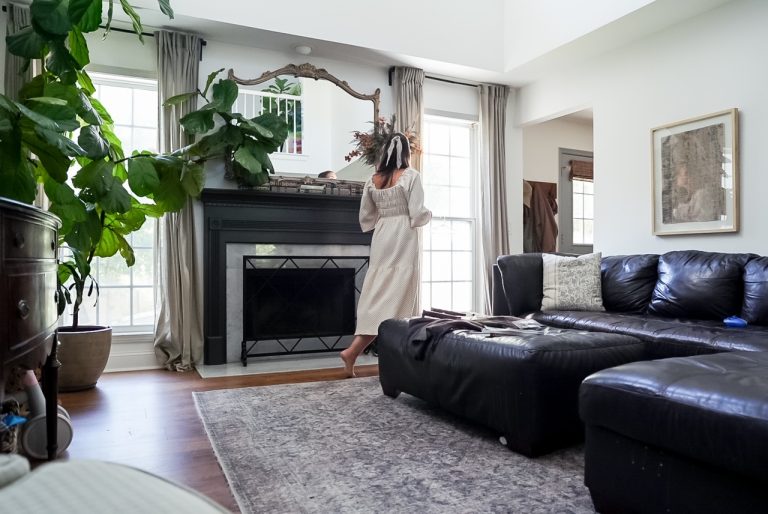
A final tip would be to begin the mindset shift of embracing a more minimalist environment. Focus on quality over quantity, and prioritize items that hold sentimental value or serve a practical purpose. A minimalist approach creates a serene environment and simplifies daily life.
I’m not saying you have to only live with 4 chairs and lamp in your living room. Also, art and throw blankets are most certainly not to be considered clutter! Just make sure you have a designated area to place those throw blankets when not in use. Your life and home should not feel like a stark hospital room… We’re going for cozy and calm here.
However, I do believe that assessing the items coming into your home on a regular basis is a smart habit to get yourself into. The more you exercise this muscle, the easier it will become.
Mindset of a Happy Stay-at-Home Mom: 8 Tips for Finding Contentment in Motherhood

Decluttering your home as a mom with young children is a transformative journey that fosters a sense of calm and order. By involving your kids and implementing practical strategies, you not only create a more organized living space but also instill valuable habits in your little ones. Remember, the key is progress, not perfection.
Happy decluttering!
Until next time,
Olivia
5 Tips for Romanticizing Your Life as a Stay at Home Mom
Pin for later!





Thank you for these tips…your beautiful pictures are inspiring! I think I will choose to work at my daughter’s clothing today as a first step!